
Whenever we experience a sharp, burning sensation in our chest after enjoying a heavy, spicy meal, we immediately blame our body chemistry. We treat our internal fluids like accidental design flaws, rushing to swallow an antacid or a cooling syrup to shut down the fire. But if you pause and look at it from a biological perspective, you have to wonder: what is the role of acid in our stomach? Why would the human body create a liquid so incredibly strong that it can dissolve metal nails and leather? The truth is, without this intense chemical bath, your system would fail to extract any nutrition from a basic bowl of rice and lentils. It is the silent, hardworking engine of your entire digestive tract.
Actually, modern lifestyle changes have made gut issues a household norm. Almost everyone is fighting bloating, sour burps, or heavy fullness. Yet, the vast majority of people treat these symptoms by assuming they have an overproduction of digestive juices. To truly fix your digestion and feel light again, you must understand what is the role of acid in our stomach. It goes far beyond simply melting down your dinner; it protects your bloodstream from dangerous environmental invaders. Let us look at how this beautiful internal system functions, learn the proper scientific terms, and explore how balancing this fluid can completely transform your daily health.
Understanding the Basics: What is the Role of Acid in Our Stomach?
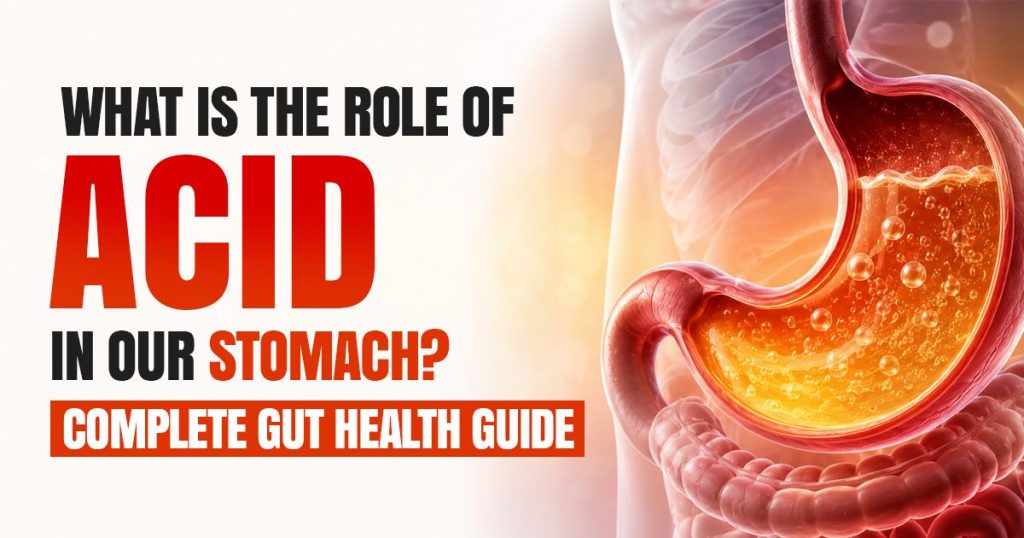
To put it in the simplest terms possible, your stomach is a specialized blender that requires a very strong chemical agent to turn solid food into a smooth liquid. When people ask what is the role of acid in our stomach, the immediate answer is chemical breakdown. The tissues in your mouth break down food mechanically through chewing, but your stomach must break it down on a molecular level.
When you swallow a bite of food, it lands in an environment that is intentionally kept highly acidic. This acidity acts like a master key that unlocks complex nutrients. Without this intense environment, proteins would pass through your system completely whole, causing severe internal inflammation and major nutritional deficiencies. The fluid works as an activator, a processor, and a shield all at the same time.
The Chemistry of Digestion: Which Acid is Present in Stomach?
Before exploring its many jobs, we must establish a clear foundational fact: which acid is present in stomach linings? The liquid inside you is not just plain water with a bit of sour lemon juice. It is a highly concentrated, corrosive chemical solution produced by specialized parietal cells inside your stomach walls.
When looking at which acid is present in stomach tests, scientists point directly to Hydrochloric Acid. This chemical is highly potent, keeping the pH level of a healthy stomach between 1.5 and 3.0. To give you an idea of how strong that is, battery acid has a pH of around 1.0. Your body is comfortably housing a fluid that could burn a hole through a wooden table! It stays safe because your stomach walls are constantly coated in a thick, alkaline mucus blanket that keeps the corrosive liquid from digesting the stomach itself.
The Biological Stomach Acid Name and Its Internal Balance
While we talk about chemicals, the true medical stomach acid name is gastric juice. Gastric juice is a complex cocktail made of water, mucus, electrolytes, Hydrochloric Acid, and special digestive enzymes. It is a finely tuned recipe that your brain regulates every time you smell, see, or even think about a meal.
Understanding the proper stomach acid name helps us see that it isn’t a single liquid, but a shifting ecosystem. The moment you take a bite of food, your brain signals your stomach to pump more juice to match the weight of the meal. If you eat a light salad, the secretion is mild. If you eat a heavy plate of mutton or paneer, the system releases a massive wave of gastric juice to tackle the heavy proteins.
What Are the Function of Hydrochloric Acid in the Stomach?
Most people are shocked to learn that digestion is only half the story. When you ask what are the function of hydrochloric acid in the stomach, you open up a multi-layered defense manual that keeps your whole body running safely.
1. Activating the Protein Cutters
The primary answer to what are the function of hydrochloric acid in the stomach involves an enzyme called pepsin. When your stomach creates pepsin, it is initially in an inactive, sleeping form called pepsinogen. It is completely useless in this state. The strong presence of Hydrochloric Acid acts like an alarm clock. It drops the pH, cutting the sleeping enzyme open and turning it into active pepsin. Once awake, pepsin begins cutting long, complex protein chains into small peptides that your small intestine can actually absorb.
2. Sterilizing Your Food Supply
Every single thing we touch, breathe, and eat is covered in billions of microscopic organisms. Think about the street food we love, or the fresh fruits that have been handled by multiple hands. When exploring what are the function of hydrochloric acid in the stomach, we must view it as a primary sterilization chamber. The acid acts like a deep sanitizing bath. Most harmful bacteria, fungi, parasites, and viruses cannot survive a single minute inside a healthy stomach pH. It kills them instantly, saving you from daily bouts of food poisoning, diarrhea, and chronic gut infections.
Mouth: Mechanical Chewing
| Stomach: Hydrochloric Acid Bath >>>>>>>>>>>>>>>> | Kills Living Germs & Parasites |
| Enzyme Activation: Pepsin wakes up >>>>>>>>>>>>> | Breaks Complex Protein Chains |
| Nutrient Unlocking: Minerals Dissolve >>>>>>>>>>>>> | Ready for Intestinal Absorption |
The Deep Dive into the Essential Function of HCl in Stomach Passages
Let us look deeper into the specific chemical function of hcl in stomach pathways. Beyond proteins and bacteria, your body needs this liquid to absorb essential micronutrients that keep your blood rich and your bones strong.
Many minerals in their natural state are tightly bound to organic compounds. The function of hcl in stomach fluids is to dissolve these bonds, turning minerals like iron, calcium, magnesium, and zinc into an ionized, soluble form. Your intestines are completely blind to non-ionized minerals. If the function of hcl in stomach systems is weak, you can take all the calcium and iron supplements you want, but they will simply pass right through your body unused. Furthermore, this fluid is crucial for separating Vitamin B12 from the proteins it travels with, which is why a lack of acid directly leads to chronic fatigue, low hemoglobin, and nerve issues.
Must Read: How to Reverse Fatty Liver: 5 Proven Steps to Heal Your Liver
Recognizing the Hidden Warning Signs: Low Stomach Acid Symptoms
In our current society, we are completely flooded with advertisements for anti-gas medicines and acidity pills. We have been conditioned to believe that any burning, burping, or bloating means our body is producing too much fluid. However, clinical experience shows that a massive number of people are actually suffering from severe low stomach acid symptoms.
When your stomach fails to produce enough juice, the food you swallow cannot be broken down efficiently. Instead of moving quickly into the intestines, the heavy meal sits in your stomach for hours, rotting and fermenting. This fermentation produces toxic organic gases that build up pressure, forcing the stomach valve open and pushing tiny droplets of acid upward into your throat. This causes a burning feeling, tricking the user into thinking they have high acidity when they are actually suffering from classic low stomach acid symptoms.
If you want to know if your gut is struggling, watch out for these clear low stomach acid symptoms:
- Bloating within 30 minutes of eating: Feeling intensely full, heavy, and distended almost immediately after a meal.
- Excessive burping and gas: Constant, foul-smelling burps after consuming meats, dals, or heavy dairy products.
- Undigested food pieces in stool: A definitive sign that the chemical blender failed to run its full cycle.
- Chronic hair thinning and weak nails: Because your body can no longer extract protein, iron, and zinc to rebuild your hair and nails.
- Developed food allergies: Large, partially digested food particles slip into the lower gut, confusing your immune system and triggering sudden sensitivities.
The Crucial Impact of Hydrochloric Acid in Stomach Ecosystems
Having a consistent level of hydrochloric acid in stomach linings is the foundation of long-term health. When the fluid levels drop permanently—a condition known medically as hypochlorhydria—the entire downstream digestive path breaks down.
Without enough hydrochloric acid in stomach juices, the partially digested food arriving in the small intestine is too alkaline. This confuses your pancreas and gallbladder, which wait for an acid signal to release their own digestive enzymes. Because the signal never comes, digestion stalls completely. Harmful bacteria that should have been killed in the stomach survive and migrate down into the small intestine, leading to a painful condition called SIBO (Small Intestinal Bacterial Overgrowth). Keeping your hydrochloric acid in stomach strong is the single best way to protect your entire lower gut from long-term dysbiosis (bacterial imbalance).
Practical Ways to Restore Your Digestive Balance Naturally
If you recognize that you are dealing with low stomach acid symptoms, you do not always need a lifetime of chemical pills. Your body has an incredible capacity to balance itself if you change your daily habits and respect your internal engine.
- Stop Diluting Your Digestive Fire: One of the worst habits is drinking a large bottle of ice-cold water right in the middle of your lunch or dinner. This completely dilutes the hydrochloric acid in stomach fluids, making it weak and useless. Try to drink water 30 minutes before your meal or wait 45 minutes after you finish eating.
- Chew Until Your Food is Liquid: Your stomach does not have teeth. If you swallow large lumps of roti or meat in a hurry, you place a massive mechanical burden on your gastric juice. Chew your food at least 20 to 30 times so the liquid can coat every single particle easily.
- Manage Your Stress Levels Before Eating: If you eat while watching stressful news, checking work emails, or driving a car, your brain triggers the “fight-or-flight” response. In this state, your body shuts down the function of hcl in stomach glands completely to save energy. Always sit down, take three deep breaths, and eat your food in a calm, peaceful state of mind.
- Utilize Natural Bitter Stimulants: Eating a small piece of fresh ginger mixed with a few drops of fresh lemon juice and a pinch of black salt 15 minutes before a heavy meal acts as a natural spark plugs for your gastric glands, encouraging them to secrete a healthy amount of juice.
The Long-Term Danger of Self-Medicating with Antacids
We live in a time where popping a “gas capsule” first thing in the morning has become a casual routine for millions of people. While these pills offer fast relief from temporary burning, using them continuously for months or years completely neutralizes the vital hydrochloric acid in stomach defenses.
By constantly drying up your gastric juices through self-medication, you leave your body wide open to nutritional deficiencies, chronic bone weakness (as calcium cannot dissolve), and an incredibly weak immune system. Always seek the advice of a trusted medical professional if your digestive discomfort persists, rather than turning off a life-saving chemical system that your body works incredibly hard to produce every day.
Frequently Asked Questions (FAQs)
1. What is the real stomach acid name that doctors look for?
The overall solution is called gastric juice, but the primary chemical compound that makes it work is Hydrochloric Acid (HCl). This is the exact stomach acid name used when analyzing your gut’s chemical strength.
2. Is low stomach acid symptoms dangerous over a long period?
Yes, actually. If your stomach juice remains weak for a long time, your body will face severe deficiencies in Vitamin B12, iron, and calcium. This can slowly lead to anemia, chronic muscle weakness, osteoporosis (brittle bones), and leaky gut issues.
3. Which acid is present in stomach cells during long fasts?
The acid does not change; hydrochloric acid in stomach cells remains the only one present. During long fasts, your body keeps production very low, but if you smell food or get stressed, a sudden splash of acid on an empty stomach wall can cause a raw, gnawing ache.
4. What are the function of hydrochloric acid in the stomach regarding immune defense?
It acts as your primary internal firewall. The chemical properties of the acid are so harsh that it destroys the cell membranes of ingested pathogens, preventing bad bacteria from reaching your intestines and multiplying.
5. How can I test my acid levels safely at home?
A popular, simple method is the baking soda test. Mix a quarter teaspoon of baking soda in a small glass of room-temperature water and drink it first thing in the morning on an empty stomach. If you have healthy levels of hydrochloric acid in stomach juices, the chemical reaction should make you burp within 2 to 3 minutes. If it takes longer than 5 minutes, it could point toward a low acid tendency.
Conclusion: Respect the Power of Your Digestive Core
Your gut is the root of your physical energy, your mood, and your overall long-term immunity. Now that you completely understand what is the role of acid in our stomach, you can stop treating it like a burning mistake and start respecting its incredible purpose. It is a brilliant, natural filter designed to cleanse your food, wake up your vital enzymes, and unlock the energy your body needs to survive.
Instead of fighting your internal biology with random over-the-counter antacids, focus on building lifestyle patterns that support your digestive health. Sit down to eat calmly, stop drinking ice water with your meals, chew your food with patience, and pay close attention to any subtle low stomach acid symptoms. When you protect the natural function of hcl in stomach pathways, you give your entire body a baseline of vitality and strength. Take good care of your digestive fire, and it will keep your body running smooth, clean, and completely energized for years to come!