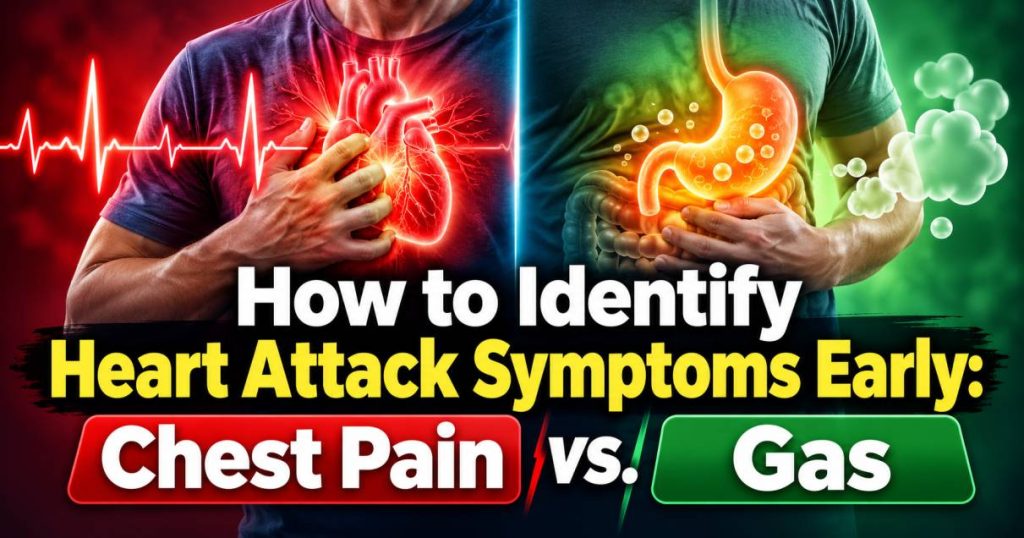

Few feelings in life create as much sudden panic as a sharp discomfort right in the middle of your chest. The human mind instantly jumps to the worst possible outcome: am I having a cardiac arrest? Or is it just that heavy dinner I had a couple of hours ago? In Indian households, where rich spices and late-night dinners are quite common, gas pain in chest is an everyday complaint. Because of this, many people tend to brush off serious discomfort as simple indigestion, taking an antacid powder or drinking soda water hoping it will pass.
However, ignoring genuine heart attack symptoms can lead to irreversible damage to your cardiac muscles. Understanding the critical differences between chest pain vs gas is one of the most vital health lessons you can learn for yourself and your family. While both conditions can cause severe discomfort behind the breastbone, their origin, progression, and physical signals are vastly different.
Knowing when to see a cardiologist can mean the exact difference between a quick recovery and a life-threatening emergency. This comprehensive guide breaks down everything you need to know about differentiating cardiac distress from gastric distress, helping you identify early signs of heart attack promptly and seek emergency chest pain treatment at the best heart hospital near me.
What Are the Early Heart Attack Symptoms Everyone Should Know?
Recognizing early signs of heart attack before a major cardiac event occurs is the single most effective way to save a life. A heart attack happens when blood flow to a section of the heart muscle is suddenly blocked, usually by a clot in a coronary artery. Without oxygen-rich blood, the heart tissue begins to suffer damage immediately. Recognizing these heart attack symptoms early allows you to act fast.
Contrary to what we often see in movies, a cardiac event does not always begin with a dramatic collapse where a person clutches their chest and falls to the ground. In reality, heart attack symptoms can build up gradually over hours or even days. They frequently present as a mild feeling of heaviness, uncomfortable pressure, or a tight squeezing sensation in the center of your chest that refuses to go away. Identifying early signs of heart attack helps ensure you seek emergency chest pain treatment without delay.
To help recognize heart attack symptoms quickly, pay close attention to these primary physical signals:
Early Heart Attack Warning Signals
- Uncomfortable pressure or squeezing in the center of the chest
- Pain radiating to the left arm, neck, jaw, or upper back
- Cold, clammy sweating accompanied by unexplained dizziness
- Sudden breathlessness, even while resting comfortably
- Nausea or a choking sensation in the throat (often mistaken for acidity)
Beyond chest discomfort, pay attention to where the pain travels. Classic heart attack symptoms often radiate outward to your left shoulder, down your left arm, up into your lower jaw, or across your upper back between the shoulder blades. Women, elderly individuals, and people living with long-term diabetes often experience atypical heart attack symptoms.
They might feel no severe chest pain at all, but instead report extreme, unexplained fatigue, sudden breathlessness while sitting quietly, or breaking out in a cold, clammy sweat. If you or a family member experience this combination of heart attack symptoms, treat it as a medical emergency immediately and look for the best heart hospital near me.
Difference Between Heart Pain and Gas Pain: How to Tell Them Apart
Understanding the exact difference between heart pain and gas pain can be life-saving because both conditions create pressure behind your sternum (breastbone). However, if you observe the nature of the pain, its duration, and how your body reacts when you move, the difference between heart pain and gas pain becomes much clearer. Evaluating chest pain vs gas relies heavily on watching these specific patterns.
1. The Nature and Quality of the Pain
- Gas Pain in Chest: Gastric discomfort is usually described as a sharp, burning, or jabbing sensation. It often feels like trapped air is pushing upward against your diaphragm. The intensity of gas pain in chest tends to shift or move around rather than staying stuck in one fixed spot.
- Heart Attack Symptoms: A cardiac event feels more like a heavy weight, severe tightness, or a crushing sensation—as if a heavy lock is pressing directly onto your sternum. When analyzing chest pain vs gas, cardiac pain is rarely described as a sharp needle-like jab.
2. Pain Duration and Pattern
- Gas Pain in Chest: Gastric pain often changes when you change your physical posture. For instance, sitting upright, taking a deep breath, or burping might bring instant, temporary relief from gas pain in chest. The pain might also peak right after you eat or lie flat on your bed.
- Heart Attack Symptoms: Cardiac pain is continuous and steady. It usually lasts longer than a few minutes or comes and goes in waves that grow progressively more intense. Physical movement, changing positions, or burping will not relieve cardiac heart attack symptoms. In fact, mild physical exertion like walking up a flight of stairs will usually make cardiac discomfort significantly worse, highlighting a major difference between heart pain and gas pain.
3. Accompanying Physical Symptoms
- Gas Pain in Chest: Usually accompanied by stomach bloating, sour burps, an acid taste in the back of your throat, or a rumbling feeling in your upper abdomen. You will rarely break out in a cold sweat or feel lightheaded purely from gas pain in chest.
- Heart Attack Symptoms: Often accompanied by systemic red flags such as sudden shortness of breath, unexplained anxiety, lightheadedness, cold sweating, or a racing heartbeat. These are clear early signs of heart attack that require immediate emergency chest pain treatment.
To summarize the clinical difference between heart pain and gas pain clearly, refer to this comparative overview:
| Diagnostic Metric | Gas Pain in Chest | Heart Attack Symptoms |
|---|---|---|
| Pain Description | Sharp, burning, jabbing, or shifting feeling | Heavy pressure, crushing tightness, or deep squeezing |
| Location | Upper stomach, lower chest, shifts with posture | Center or left side of chest; fixed location |
| Radiation | Stays localized to stomach or lower chest area | Radiates to left arm, neck, lower jaw, or upper back |
| Triggers | Heavy, oily, spicy meals or long gaps between food | Physical exertion, emotional stress, or cold exposure |
| Relieving Factors | Antacids, burping, walking around, passing gas | Rest or sublingual cardiac medication (Nitroglycerin) |
| Associated Signs | Bloating, sour belching, indigestion, acid reflux | Cold sweating, breathlessness, dizziness, anxiety |
Why Does Gas Pain in Chest Feel So Much Like a Heart Attack?
Many people wonder why the human body gets these two conditions so easily confused. Understanding the difference between heart pain and gas pain requires looking at our complex nervous system wiring.
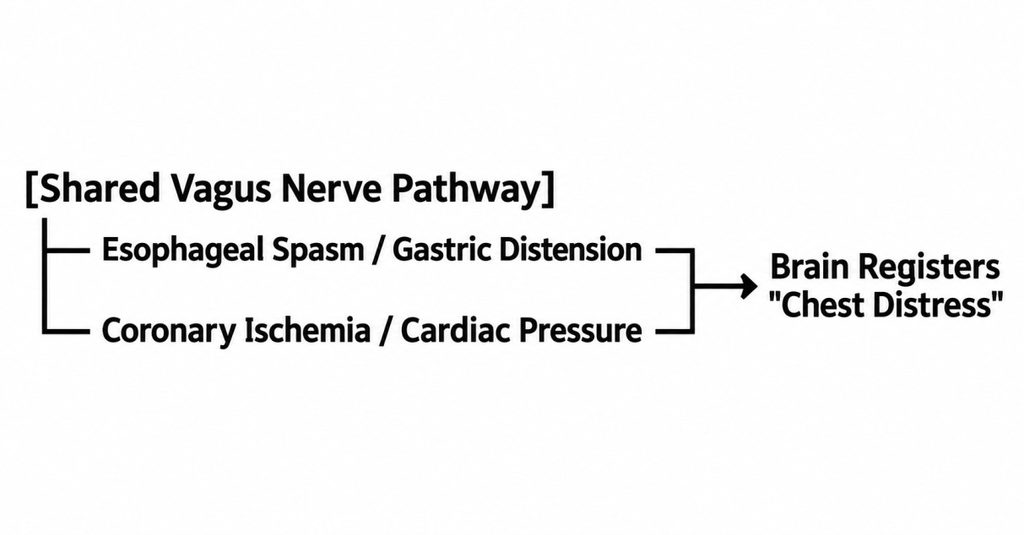
Your heart and your esophagus (food pipe) are positioned very close to each other inside your thoracic cavity, right behind your breastbone. Both of these internal organs share the same nerve pathway—specifically branches of the vagus nerve—to send pain signals up to the brain. When gas pain in chest occurs due to acid splashing up into your esophagus (causing acid reflux or esophageal spasms), the nerve endings send strong distress signals to your brain.
Because these nerves share a common neural pathway, the brain cannot always pinpoint the exact origin of the pain. It simply registers a deep distress signal from behind the sternum. This shared pathway is precisely why severe acid reflux can feel almost identical to early signs of heart attack. However, because you cannot rely on feeling alone when assessing chest pain vs gas, you must never assume that severe, unexplained chest discomfort is “just gas.” If you suspect heart attack symptoms, seek emergency chest pain treatment at the best heart hospital near me right away.
When to See a Cardiologist for Persistent Chest Discomfort
Knowing when to see a cardiologist is essential for maintaining long-term heart health and preventing sudden cardiac crises. If you experience an acute, sudden episode of chest pain accompanied by sweating, arm pain, or breathlessness, you should not wait for an OPD appointment—you must seek emergency chest pain treatment at the best heart hospital near me immediately.
However, many heart conditions develop quietly over time. Knowing when to see a cardiologist becomes important if you notice any of these ongoing warning signs:
- Exertional Discomfort: You regularly experience a mild tightness or heaviness in your chest when walking fast, climbing stairs, or carrying heavy groceries, which goes away as soon as you sit down and rest. This is one of the subtle early signs of heart attack risk.
- Unexplained Shortness of Breath: You feel out of breath doing routine household activities that you used to handle easily a few months ago, a common reason regarding when to see a cardiologist.
- Frequent Episode Confusion: You frequently get severe gas pain in chest that requires heavy antacids, especially if you have risk factors like high blood pressure, diabetes, high cholesterol, or a family history of heart disease. You should evaluate chest pain vs gas with a specialist.
- Irregular Heartbeats: You regularly feel your heart fluttering, skipping beats, or racing suddenly while you are resting quietly, which clearly indicates when to see a cardiologist.
- Swelling in Feet or Ankles: Unexplained swelling in your lower legs alongside mild chest heaviness can point toward early heart failure or poor circulation.
When evaluating heart attack symptoms or deciding when to see a cardiologist in Western Uttar Pradesh, having access to a comprehensive cardiac center makes a world of difference. Well-established tertiary institutions like Lokpriya Hospital on Garh Road in Meerut provide round-the-clock cardiac care, making it a highly trusted choice for anyone searching for the best heart hospital near me.
With experienced senior interventional cardiologists such as Dr. Harimohan Choudhary and Dr. Md Talha Khan Abid on staff, alongside non-invasive cardiac specialists, patients receive complete, accurate diagnostic evaluations. Having a 24/7 Cath Lab, advanced Echocardiography setup, TMT stress testing, and a dedicated Coronary Care Unit (CCU) under one roof ensures that if your chest pain turns out to be cardiac, emergency chest pain treatment begins without losing precious time.
What Should You Do Immediately During a Chest Pain Emergency?
If you or someone near you suddenly experiences chest pain and you are trying to analyze chest pain vs gas, take these clear, safe steps immediately to receive emergency chest pain treatment:
- Stop All Physical Activity: Have the person sit down comfortably on a chair or on the floor with their back supported. Do not let them walk around or exert themselves. Sitting upright reduces the workload on the heart, which is critical when early signs of heart attack appear.
- Loosen Tight Clothing: Unbutton tight collars, loosen neckties, belts, or tight waistbands to help them breathe easily while evaluating heart attack symptoms.
- Check for Red Flag Signs: Look for cold sweating, paleness, difficulty speaking, or pain spreading to the left arm or jaw. If these early signs of heart attack are present, treat it as a cardiac emergency instantly and head to the best heart hospital near me.
- Do Not Drive Yourself: Call an Advanced Life Support (ALS) cardiac ambulance immediately to take you to the best heart hospital near me rather than driving a two-wheeler or car yourself. An ambulance allows trained paramedics to monitor vital signs and administer emergency chest pain treatment on the way.
- Be Cautious with Self-Medication: If you suspect heart attack symptoms, do not keep drinking glass after glass of soda or eating random home remedies thinking it is gas pain in chest. If the person has known heart disease and a prescribed sublingual tablet (like Nitroglycerin), assist them in taking it as directed by their physician while arranging emergency chest pain treatment.
How Cardiologists Determine if Chest Pain is Cardiac or Gastric
When you arrive at the best heart hospital near me with chest pain, the emergency medical team acts rapidly to evaluate chest pain vs gas and rule out life-threatening conditions first. To manage heart attack symptoms effectively, a cardiologist uses a clear, step-by-step diagnostic workflow for emergency chest pain treatment:
Emergency Room Diagnostic Workflow
- 12-Lead Electrocardiogram (ECG) ➔ Completed within 10 minutes
- Cardiac Enzyme Blood Test (Troponin-I) ➔ Measures heart muscle damage
- 2D Echocardiogram ➔ Checks heart chamber movement and pump function
- Gastric Evaluation / Endoscopy ➔ Performed once cardiac issues are ruled out
- 12-Lead ECG (Electrocardiogram): This simple, painless test records the electrical activity of your heart. It can show if an acute heart attack is happening or if there are early signs of heart attack related to reduced blood flow. It is performed immediately when you arrive for emergency chest pain treatment.
- Troponin-I Blood Test: Troponin is a specific protein found inside heart muscle cells. When heart cells are damaged during heart attack symptoms, troponin leaks into the bloodstream. A simple blood test confirms the difference between heart pain and gas pain.
- 2D Echocardiogram: An ultrasound of the heart that allows the cardiologist at the best heart hospital near me to see the heart valves, measure the pumping capacity, and check if any wall of the heart is moving abnormally.
- Coronary Angiography: If tests confirm early signs of heart attack or a blocked artery, an interventional cardiologist provides immediate emergency chest pain treatment by performing an angiogram to locate and open the blockage with a stent.
If all cardiac tests come back completely normal and rule out heart attack symptoms, the doctor will then evaluate if your discomfort is due to gas pain in chest, acid reflux, or peptic ulcer disease.
Simple Daily Habits to Protect Both Your Heart and Your Stomach
Preventive care is always better than needing emergency chest pain treatment. Interestingly, many healthy lifestyle habits that prevent heart attack symptoms also keep gas pain in chest from occurring:
- Eat Smaller, Balanced Meals: Overeating puts heavy pressure on your stomach, causing gas pain in chest. At the same time, processing heavy meals increases your heart rate and blood pressure, making it harder to distinguish chest pain vs gas.
- Avoid Lying Down Right After Dinner: Maintain a gap of at least 2 to 3 hours between your dinner and bedtime. Lying down flat immediately after eating allows stomach acid to flow upward, triggering gas pain in chest that can mimic heart attack symptoms.
- Exercise Regularly: Engaging in 30 minutes of moderate aerobic exercise, such as brisk walking, five days a week strengthens your heart muscles, reduces early signs of heart attack risks, and improves gut motility.
- Manage Stress Levels: Chronic mental stress triggers the release of stress hormones that constrict blood vessels and disrupt stomach acid balance, increasing both gas pain in chest and heart attack symptoms.
- Get Regular Preventive Screenings: Knowing when to see a cardiologist for routine checkups is vital. Schedule an annual health checkup at the best heart hospital near me to monitor your blood pressure, lipid profile, and blood sugar levels.
Frequently Asked Questions (FAQs)
Does gas pain spread to the left arm?
No, true gas pain in chest stays localized within the stomach area, upper abdomen, or behind the breastbone. Understanding the difference between heart pain and gas pain helps here, as gas pain in chest does not radiate down the inner left arm or up into the lower jaw. If you feel pain spreading to your left arm alongside chest heaviness, these are classic early signs of heart attack that require immediate emergency chest pain treatment at the best heart hospital near me.
Can taking an antacid relieve heart attack symptoms?
No. An antacid only neutralizes stomach acid to relieve gas pain in chest. It has no effect on blood flow in the coronary arteries. If your chest discomfort goes away completely after taking an antacid, it was likely gas pain in chest. However, if heavy tightness persists, these could be heart attack symptoms, and you should seek emergency chest pain treatment immediately.
Why do heart attacks often feel like indigestion?
Heart attacks can feel like indigestion because the heart muscle and the esophagus share the same nerve pathways to the brain. When evaluating chest pain vs gas, the brain often misinterprets reduced cardiac blood flow as gas pain in chest. Recognizing this shared pathway highlights the importance of knowing the difference between heart pain and gas pain and understanding when to see a cardiologist.
When should I see a cardiologist for chest pain?
Knowing when to see a cardiologist is crucial whenever you experience recurring chest heaviness during physical activity, unexplained breathlessness, or if you notice early signs of heart attack. If chest pain is sudden, severe, or accompanied by sweating and dizziness, do not wait—seek emergency chest pain treatment at the best heart hospital near me.
Can severe stress cause gas pain in chest that feels like a heart attack?
Yes. High mental stress can cause muscle tightness in the chest wall and increased stomach acid production, leading to gas pain in chest. However, because stress-induced pain can mimic heart attack symptoms, it is always safest to visit the best heart hospital near me for an ECG to evaluate chest pain vs gas accurately.